
The Pelargonium Patent case and the ruling that we had blogged about here was hailed as a landmark decision against bio-piracy. It, however, seems to have done little to abate the enthusiasm of companies to set out applying for and sometimes even getting a patents for, what is considered, traditional knowledge of indigenous communities in Africa.
Tanzania is contemplating moving the appropriate forum to stop the governments of the USA and Brazil from patenting a sorghum gene isolated from a variety of sorghum indigenous to Tanzania. The gene allows crops to be tolerant to aluminum found in the soil, the toxicity of which stunts the growth of crop plant roots. The USPTO is said to have granted the patent in September 2009 and further patent applications for the same are pending before the EPO and in Australia.
The Kenyan case relates to a patent granted by the USPTO in March 2010 for a medicinal herbal composition derived from Kenyan plants for treatment of HIV and other infectious diseases. However, in this instance, the patent granted is for process and not the plants itself.
The debat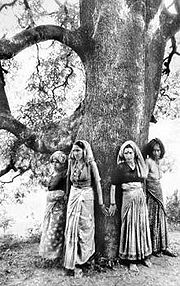 e of bio-piracy has, from its initiation, taken the romantic hue of David v. Goliath. However, this is an issue that is fast gaining the spotlight in the realm of IP policy. With the ruling in the Pelargonium Patent case, it is 1-0 in favour of the indigenous communities.
But, the game is far from over.
While pharmaceutical companies try their best to find that fine balance and patent (and market) what they truly believe is a novel invention, the indigenous communities currently are fighting hard to ensure they’re not left out in the cold. Questions of bio-piracy are tricky and are based on far more than just rhetoric. They require incisive analysis, which hopefully we will be able to present to our readers once we lay our hands on more information.

Chipko…
That was very informative and well written. Mentioned below is an excerpt of an article on Traditional Knowledge.
“Misuse of traditional knowledge and measures to prevent the same have been attracting attention since the turmeric patent controversy. After successfully revoking turmeric patent claims that formed part of traditional knowledge, the Indian government has taken numerous initiatives ranging from legislative and policy changes to documentation and creation of a library of information (TKDL). With the press and media joining the effort, the awareness with respect to rights of traditional knowledge holders , actions against traditional knowledge misuse, policy initiatives and so on has been increasing. The TKDL has been playing an important role in revoking and preventing patents on traditional knowledge. Industry and public reaction with respect to patent filings involving traditional knowledge has been aggressive and many times emotional…….read more at http://www.patentpill.com/2010/10/traditional-knowledge-use-or-misuse.html